
 Michal Krejčí
This guide will walk you through setting up the domain records DKIM, SPF, DMARC, and CNAME (domain router) with Webglobe. These records must be configured if you want to securely send bulk emails from the Boldem app and prevent your messages from ending up in spam.
- Log in to your Boldem account.
- In the left menu, select Settings and click Domains.
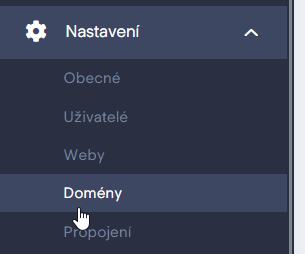
- If you didn’t enter a sending domain name when creating your account, click the + Add sending domain button. If you already entered the domain when creating your account and see it in the list, proceed to step 4 below.
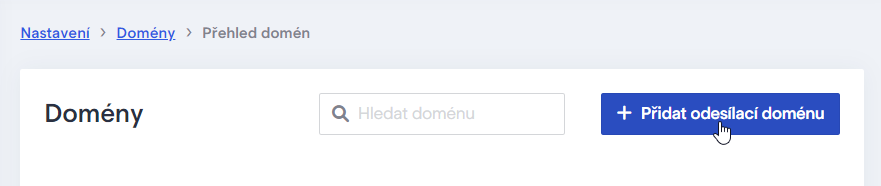
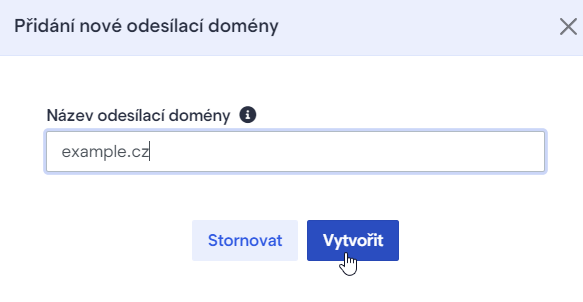
- Enter the sending domain and confirm with the Create button. Enter the domain without www, e.g. example.cz.
- Click the Details button for the domain in the list.

- Click the Domain Settings tab.
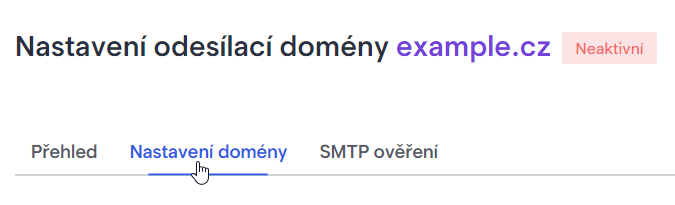
The page will display the DKIM signature, SPF record, and CNAME record. Keep this window open; you’ll need it in a moment.
- In the new window, sign in to your Webglobe account to manage your domain at https://admin.webglobe.cz/.
- Select the domain in the list whose settings you want to change.

- In the left-hand menu, select DNSThe Domain Name System (DNS) is a hierarchical and distributed naming system for computers, services, and other resource... and click DNS records. A list of domain records will appear.

If you don’t see the DNS records option in the menu, your domain is likely not managed by Webglobe but by another party, usually your hosting provider. In that case, contact them to request a DNS change.
DKIM Record Settings
- In the Webglobe interface, click the New DNS Record button on the right.
- In the drop-down menu Type, select TXT.
- In your Boldem account, in the DKIM signature section, copy the required record from the Name custom field by clicking the copy icon.
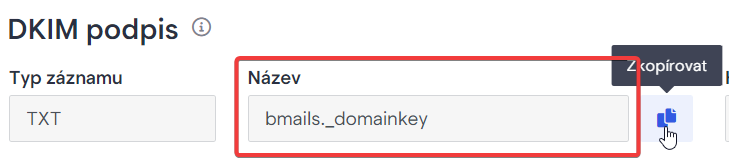
- In the Webglobe interface, paste the copied value into the Name field.
- In your Boldem account, in the DKIM signature section, copy the required record from the Value custom field by clicking the copy icon.

- In the Webglobe interface, paste the copied value into the Value field.

- Do not change the value in the TTL dropdown.
- Save the record by clicking the Save button. You can find the resulting record on the TXT records tab and it will look something like this:

SPF Record Settings
Important notices:
- Each domain or subdomain can have only one SPF record.
- If your domain already has an SPF record, do not create a new one; add the value from Boldem to the existing SPF record.
- When checking TXT records with SPF data, be careful you are editing the records for the correct domain! SPF data can differ for the base domain (e.g., example.cz) and a subdomain (e.g., subdomena.example.cz). In your Boldem account you will most likely use the base domain (example.cz).
- An SPF record can contain data for up to 10 domains.
Edit existing SPF record
If you find a TXT record in the list of domain records that contains SPF information for your domain (for example, example.cz), edit that record instead of creating a new one. Example of an existing record:

If you find a question mark (?all) at the end of an existing SPF record, it means the SPF record is inactive! In that case, when editing (see the procedure below) replace the question mark with a hyphen, i.e. -all. Before updating the record, contact your domain administrator (registrar) to discuss why the question mark was used in the settings.
- Click the Edit button on the row to the right of this record.
- A new dialog for modifying the details will appear. In the Value field, insert the string include:spf.Boldem.cz before the ~all or -all tag, or replace the ?all tag with the -all tag.

- Save the record by clicking the Save button.
Add new SPF record
If you don’t find a TXT record in the domain records list that contains SPF information for your domain, follow these steps:
- In the Webglobe interface, click the New DNS Record button on the right.
- In the drop-down menu Type, select TXT.
- Leave the Name field empty.
- Do not change the TTL value.
- In your Boldem account, in the SPF record section, copy the required record from the Value custom field by clicking the copy icon.

- In the Webglobe interface, paste the copied value into the Value field.

- Save the record by clicking the Save button. The resulting record will look something like this:

DMARC Record Settings
- Each domain or subdomain can have only one DMARC record.
- If your domain already has a DMARC record, do not create a new one; incorporate the value from Boldem into the existing DMARC record.
- When checking TXT records for DMARC, make sure you are modifying the records for the correct domain! DMARC settings can differ between the base domain (e.g., example.com) and a subdomain (e.g., subdomena.example.com). In your Boldem account you will most likely use the base domain form (example.com).
Edit existing DMARC record
Click the TXT records tab. If you find a TXT record in the domain records list that contains DMARC data for your domain (e.g., for example.com), you should edit that record instead of creating a new one. Example of an existing record:
v=DMARC1; p=none; rua=mailto:dmarc@example.com- Click the Edit button on the row to the right of this record.
- A new dialog for changing the details will appear. In the Value field, paste the value you copied from your Boldem account’s Value section. Copy only the part of the string starting with mailto. Example DMARC value in Boldem:

- In this case, copy only the mailto:pdgpt8b8@dmarc.boldem.cz portion.
- At the end of the part of your existing record that starts with rua, add a comma and paste the copied portion of the record. The resulting form of the example above would be:
v=DMARC1; p=none; rua=mailto:dmarc@example.com,mailto:pdgpt8b8@dmarc.Boldem.cz- Save the record by clicking the Save button.
Add New DMARC Record
If you don’t find a TXT record in the list of domain records that contains DMARC information for your domain, follow these steps:
- In the Webglobe interface, click the New DNS Record button on the right.
- From the drop-down menu Type, select TXT.
- A field to fill out will appear.
- Paste into the Name field the value you copied from your Boldem account’s DMARC record section, from the Name custom field, by clicking the copy icon.

- Do not change the TTL value.
- In the Value field, paste the code you copied from your Boldem account’s DMARC record section under the Value custom field by clicking the copy icon.

- Save the record by clicking the Save button.
CNAME record settings (domain router)
- In the Webglobe interface, click the New DNS Record button on the right.
- From the drop-down menu Type, select CNAME.
- In your Boldem account, under CNAME (domain router), copy the required record in the Name custom field by clicking the copy icon.
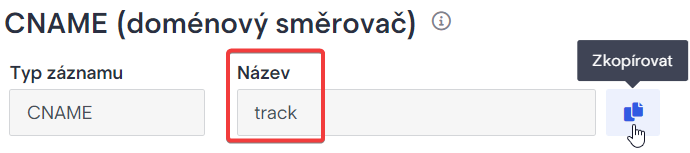
- In the Webglobe interface, paste the copied value into the Name field.
- Do not change the TTL value.
- In your Boldem account, in the CNAME (domain router) section, copy the required record from the Value custom field by clicking the copy icon.

- In the Webglobe interface, paste the copied value into the Value field.

- Save the record by clicking the Save button. The resulting record will look something like this:

Domain record validation
After you set up the records, it can take some time for the information to propagate to DNS servers. For most providers this should happen within an hour, and usually no later than 24 hours.
After setting up all records, go to Settings/Domains in the Boldem app, select your domain, and on the Domain Settings tab click the Check settings button.

The ideal result of the check should be green-highlighted information for each record:
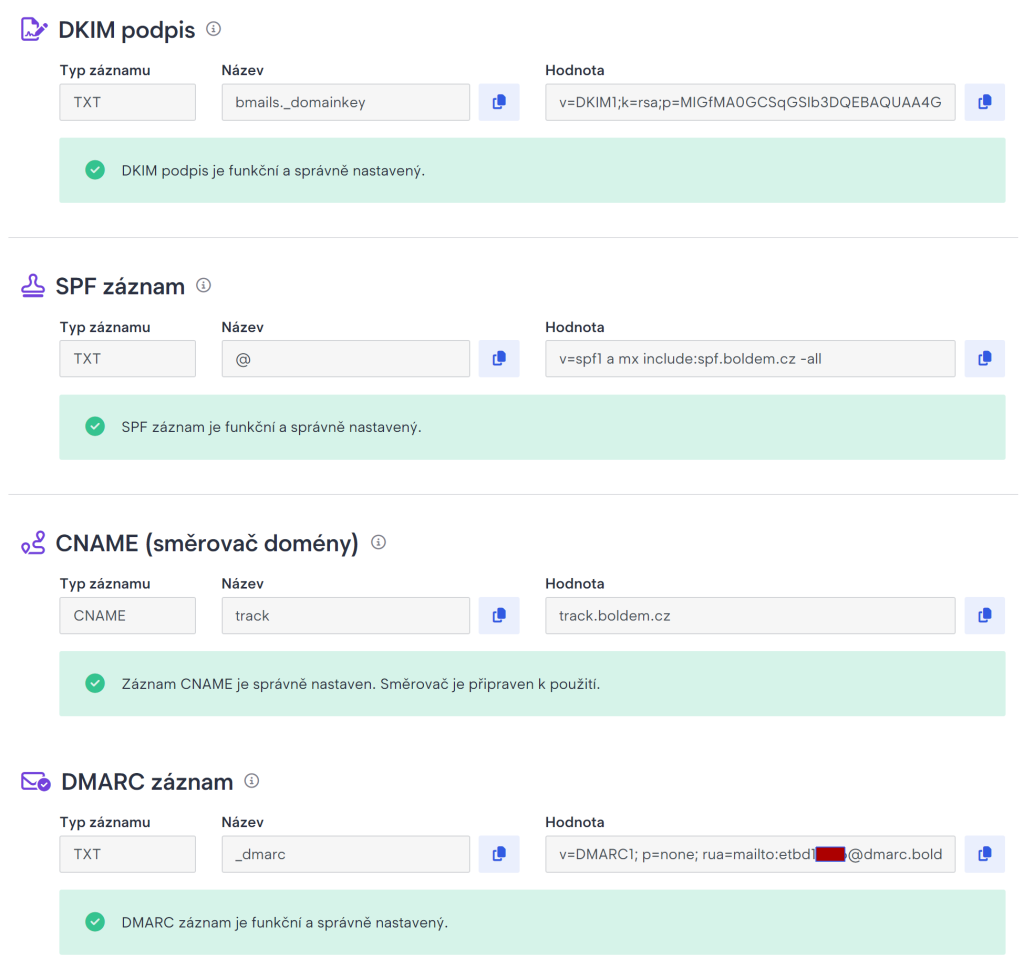
If domain changes don’t take effect after 24 hours, contact your domain provider’s support to verify that the records were entered correctly, then repeat the domain verification process in the Boldem app.
Missing certificate for HTTPS
When validating the CNAME record, you may encounter the following error:
The CNAME record is configured correctly. However, to enable full functionality you still need to set up a certificate for HTTPS.

This error occurs when the domain contains a CAA (Certification Authority Authorization) record. A CAA record allows domain owners or administrators to declare which certificate authorities may issue SSL certificates for the domain.
When using Boldem, we use a Let’s Encrypt certificate, so add a new record to your domain with this identifier. Leave existing CAA records unchanged.
Example of adding a record with provider Wedos (Vedos):
- After logging in to the domain administration, click the domain you want to edit.
- Select the Edit DNS records. An overview of the domain’s records will appear.
- Check whether a CAA record containing the keyword “letsencrypt.org” exists among the records, and if not, add one by clicking new record.
- Leave the Name field blank and keep TTL at its default. In the Type field, select CAA.
- Enter the following in the Data field:
0 issue “letsencrypt.org”

- Click Save record.
The resulting CAA record:

Confirm by clicking the Apply changes button.
Wait 60 minutes and try verifying the domain records in the Boldem app again. If the error persists after another 24 hours, contact customer support.

